
- 17 March 2027
- 9:00am - 5:00pm (PHT)
- Manila
ANNOUNCEMENTS
Due to ASEAN Summits 2026 now scheduled to take place in Makati from 8–13 March, the FutureCFO Conference Philippines has been rescheduled to one week later. The venue and program remain the same.
New date: 19 March 2026, Thursday
Same venue: New World Makati Hotel
Earn up to 5.0 ICMA CPE credits at FutureCFO Philippines!
ICMA has approved 5.0 CPE credits for attending the full-day conference. Claiming your credits is easy:
- Scan any CPE QR code located around the conference room
- Complete and submit the online form
- You will receive your ICMA CPE certificate by email within 5 working days after the event
EVENT OVERVIEW
Compressed economic growth, elevated and volatile energy and input costs, tighter external financing, and peso pressures made 2026 a gruelling challenge for many finance leaders in the Philippines. This was confirmed by 230 of senior finance leaders attending the FutureCFO Philippines Conference 2026 who identified geopolitical and trade tensions as the single greatest threat to business resilience.
While digital tools, Artificial Intelligence (AI) and automation offered clear potential for productivity and innovation, regulatory complexity, data readiness gaps and cyber risk kept expectations in check.
As businesses grapple with the introduction of the BIR e-invoicing mandate and the first wave of PFRS S1/S2 reporting beginning in 2027 for the largest listed companies, finance leaders must shift from project implementation to operational readiness, controls redesign, and extracting real cash-flow and decision-making value from the new data streams.
As both a growth market and a major Global Business Services (GBS) hub, the Philippines faces these redesign questions with intensity.
Resilience in 2027 will not be about absorbing the next shock. It will be about redesigning the finance operating model, capital allocation discipline, supply-chain financing structures, AI economics and governance, talent architecture in GBS and the broader finance function, and the data foundations that enable continuous close and investment-grade sustainability disclosures.
The mandate is clear: grow through volatility rather than merely surviving it.
For CFOs balancing growth ambitions against elevated energy costs, tighter financing conditions, and the need to scale automation and AI while meeting new compliance and assurance expectations, the 7th Annual FutureCFO Philippines Conference 2027 is the focused forum to pressure-test strategies, share what is working (and what has been paused or killed), and leave with practical frameworks for 2027 capital allocation and operating-model decisions. Themed “Reimagining Resilience”, this event is part of the largest CFO conference series in ASEAN, and will gather senior finance leaders from across industries in the Philippines to explore:
- The future finance operating model
- Supply chain finance restructuring in a fragmented environment
- Reinventing cost, growth and capital resilience in digital economy
- The value, costs and risks of AI investments
- The implications of agentic AI in today’s finance talent market
WHO SHOULD ATTEND?
CFOs, MDs, VPs, Directors, Heads, GMs, and Senior Managers, involved in:
- Financial Planning & Analysis (FP&A)
- Strategic Planning & Forecasting
- Costing & Budgeting
- Treasury Operations
- Project Financing
- Accounting and Reporting
- Merger & Acquisition (M&A)
- Investment / Portfolio Management
- Auditing & Internal Control
- Tax Governance
- Governance, Risk & Compliance (GRC)
- Statutory & Regulatory Reporting
- Fiscal Policy Planning
- Financial Technology Solutions
WHY YOU SHOULD ATTEND
The FutureCFO Conference aims to give CFOs, who also act as their company’s strategic business partner and catalyst, insights on ensuring corporate growth and successfully mitigating risks and challenges amidst the current economic and political uncertainties in their countries. The conference will also address strategies and best practices on how CFOs can reimagine finance functions and their organizations to survive and thrive in today’s fast-paced and digitally driven landscape.
This by-invitation only one-day event will gather over 120 senior finance leaders from multiple industries and offers the best opportunity to hear from the industry’s leading professionals, contribute questions from the floor, engage in incisive panel discussions that discuss real-life business cases, updates and strategies to meet the most pertinent challenges facing the finance function in 2020.
High-Level Industry Speakers
We gather 20+ industry speakers and experts from leading organizations for keynote presentations and incisive discussions so you can tap on their invaluable insights and best practices important to your finance function management and transformation.
Interactive Discussions
Be part of our interactive panel discussions that address the current hot topics, share ideas and experiences and get the answers to your pressing questions from prominent finance leaders on stage.
Networking Opportunities
Meet new business partners, engage and forge new connections with fellow finance and treasury leaders in the region, solution providers and many more at our event through luncheons, coffee breaks, one-to-one meetings and informal introductions.
Targeted In-Depth Sessions
8 hours of learning and networking opportunities packed into 10 in depth sessions. Listen to corporate-driven best practices and case studies sharing that are targeted to your profession through the personalized country-specific conferences we crafted for you - FutureCFO Conferences.
FUTURECFO CONFERENCE SERIES


2027 AGENDA
09:00
Chairperson’s Welcome Remarks
Allan Tan, Group Editor-in-Chief, Cxociety
09:15
Panel Discussion: The Future Finance Operating Model in 2027
As finance leaders navigate an increasingly complex and technology-driven business environment, the role of the CFO is evolving beyond traditional financial stewardship. Insights from Deloitte’s Finance Trends 2027 outlook suggest that CFOs are becoming strategic enterprise leaders, responsible for driving AI adoption, guiding technology investment decisions, and leading organisation-wide transformation initiatives. As more is expected of CFOs and their finance teams, finance leaders must rethink operating models, talent strategies, and capital allocation approaches to deliver greater business value.
- Overcoming persistent bottlenecks and inefficiencies in current finance operations
- Democratising financial intelligence across the business
- Restructuring finance function to power the 2027 operating model
- Successfully executing future finance operating model priorities in 2027
- Measuring the business impact of finance transformation through productivity, cost efficiency and value creation
Moderator:
Allan Tan, Group Editor-in-Chief, Cxociety
09:50
Keynote: Optimising Working Capital for Growth and Resilience
In an environment marked by economic volatility, geopolitical disruption and constrained access to capital, working capital optimisation for CFOs in 2027 has shifted from a pure internal cost-cutting exercise into a core credit and resilience strategy. Beyond liquidity management, finance leaders must balance cash preservation, funding efficiency and capital deployment to support resilience and long-term growth.
- Improving cash visibility and forecasting accuracy to drive agile financial decisions
- Aligning dynamic budgets and liquidity with changing market volatility and funding needs
- Maximising working capital returns through strategic capital allocation
- Unlocking cash across the supply chain while preserving supplier relationships and growth
10:15
Fireside Chat: Restructuring Supply Chains for Financial Resilience in an Era of Global Fragmentation
McKinsey’s CFO surveys in 2026 identified geopolitical instability or conflict as a major risk to company growth over the following 12 months. As geopolitical tensions, trade barriers, and supply chain disruptions reshape global commerce, businesses are reassessing where they source, manufacture and distribute goods. Nearshoring and friendshoring can strengthen supply chain resilience, but they also introduce financial trade-offs involving higher operating costs, capital expenditure, working capital requirements and cross-border financing. For the Philippine’s finance leaders, the pressure is to evaluate alternative supply chain configurations, manage financial exposure and balance cost competitiveness with continuity of supply.
- The financial trade-offs of nearshoring, friendshoring and existing sourcing models
- Understanding the implications for capital expenditure, inventory buffers, cash flow and liquidity
- Managing cross-border financial exposure across markets
- Balancing cost efficiency with resilience
- Optimising supply chain investment decisions on total landed cost, risk-adjusted returns and long-term competitiveness
Interviewer:
Allan Tan, Group Editor-in-Chief, Cxociety
Interviewee:
Hasan Farooq Malik, Chief Financial Officer, DHL Express Philippines
10:40
Morning Coffee Break & Networking
11:10
Keynote: Realising the Value of Agentic AI in Finance
Gartner predicts at least 15% of day-to-day work decisions will be made autonomously through agentic AI by 2028. In addition, 33% of enterprise software applications will include agentic AI by 2028. However, despite the hype surrounding agentic AI, many organisations continue to struggle to demonstrate meaningful business value and return on investment (ROI). As finance leaders look beyond experimentation, the challenge is distinguishing genuine finance transformation opportunities from overhyped promises.
- Enabling the next wave of autonomous enterprise operations
- Advancing from productivity assistants to autonomous finance operations
- Going beyond basic LLMs to harness agentic AI capabilities
- Agentic AI use cases in driving efficiency across finance
11:35
Panel Discussion: The Economics of AI Deployment – From FinOps to AI Bills
Unlike traditional software licenses, AI costs are highly variable and can scale unpredictably based on token consumption, data volumes, model selection, deployment approaches and infrastructure requirements. As organisations accelerate AI adoption, CFOs are facing increasing pressure to balance innovation with financial discipline and measurable returns. With AI expenses expected to rise alongside growing technical complexity, finance leaders must establish the right spend management frameworks.
- The financial realities of deploying and scaling AI
- AI cost challenges: token consumption, data volumes, model selection, infrastructure unpredictability
- AI spend visibility and attribution
- Financial implications of subscription-to-consumption shifts
- Controlling AI costs without suppressing innovation
Moderator:
Allan Tan, Group Editor-in-Chief, Cxociety
Panelist:
Dipto Sen, Chief Financial Officer, TP Philippines
12:10
Keynote: From Adoption to Accountability – CFO’s Role in Governing AI at Scale
As organisations accelerate AI adoption to improve efficiency, decision-making, and innovation, finance leaders face growing pressure to balance speed with accountability. A recent Deloitte survey found that 59% of CFOs view balancing AI adoption with risk management as the biggest challenge in establishing enterprise-wide AI governance. Cxociety Research in 2026 echoes this concern, with AI governance ranked as the regulatory area requiring the most immediate attention from finance teams. How can CFOs capture AI’s full potential while building the right governance to manage its risks on a scale?
- CFO’s role in ensuring responsible, ethical, and sustainable AI deployment
- Assessing the operational, regulatory, and cybersecurity risks in enterprise-wide AI adoption
- Scaling AI while maintaining robust governance, compliance, and risk oversight
- Building a structured, enterprise-wide AI governance framework
- Leveraging AI-powered continuous risk monitoring and predictive risk management
12:35
Networking Lunch
13:35
Chairman’s Welcome Remarks
Melinda Baylon, Editor, Cxociety
13:40
Keynote: Enabling Continuous Accounting Close and Real-Time Reporting in Finance
As regulatory and reporting requirements evolve, CFOs must strengthen their data and technology foundations to support faster, more accurate and auditable financial reporting. At the same time, changing market conditions are pushing finance beyond the traditional monthly close towards continuous accounting and real-time financial intelligence.
- The evolution of the financial close model
- Identifying finance processes that AI and automation can accelerate
- The operational reality of continuous close — data, process and system readiness
- Building the data and technology foundations for real-time financial reporting
14:05
Panel Discussion: Stop, Simplify, Scale: The CFO’s Role in Reallocating Capital for Growth and Resilience
Strategy often focuses on what organisations should do next, but sustainable growth also requires finance leaders to determine what they should stop doing. With increasing pressure to deliver more with less, CFOs must challenge fixed spending, reassess underperforming business lines and redirect capital towards initiatives that generate sustainable returns especially in the age when AI and automation reshape productivity and operating costs. This discussion explores how CFOs can make disciplined investment decisions, quantify the financial impact of transformation and balance short-term efficiency with long-term value creation.
- Reassessing legacy costs and low-value activities to fund strategic priorities
- Rationalising business portfolios based on profitability and strategic value
- Measuring investment impacts on margins, cash flow, return on invested capital (ROIC) and revenue
- Balancing short-term savings against long-term growth, competitiveness and resilience
Moderator:
Allan Tan, Group Editor-in-Chief, Cxociety
Panelist:
EJ A. Qua Hiansen, CFO, PHINMA Corporation
14:40
Keynote: Navigating the Philippines’ BIR E-Invoicing Mandate in 2027: From Compliance to Operational Readiness
With the BIR e-invoicing deadline set for December 31, 2026, under Revenue Regulations (RR) No. 11-2025, 2027 will be a critical period for businesses to address implementation challenges, strengthen compliance processes and optimise the value of digital tax reporting. As organisations move from implementation to execution, finance leaders must ensure seamless ERP-to-BIR integration, reliable data quality and robust internal controls while adapting to a more data-driven, system-assisted audit environment.
- Resolving ERP-to-BIR system integration and data accuracy complexities
- Redesigning finance controls, documentation and exception-handling processes for a system-assisted audit environment
- Leveraging e-invoicing data to enhance cash flow forecasting, accounts payable visibility and supplier management
- Adapting to the evolving ASEAN e-invoicing standards and improving interoperability in regional trade and tax reporting
15:05
Afternoon Coffee Break and Networking
15:35
Fireside Chat: Beyond ROI – The Environmental Economics of AI
As organisations accelerate AI adoption, the conversation is often focused on productivity gains, competitive advantage and return on investment. Yet behind every AI initiative sits a growing ecosystem of data centres, semiconductor production, energy consumption and water usage. For CFOs, understanding these hidden costs is becoming critical to investment decisions, risk management and long-term value creation. How should Philippine organisations pursue AI-driven growth while managing resource constraints, sustainability commitments and infrastructure realities?
- The true cost of AI beyond technology spending
- How data centre expansion and AI infrastructure investments affect energy security and operating costs
- The role of CFOs in balancing AI ambitions with sustainability, ESG and stakeholder expectations
- Integrating environmental and resource risks into AI business cases and capital allocation decisions
- Building an AI strategy that delivers both business value and long-term resilience
Interviewer:
Elmer Sarmiento, MBA, CPA, CMA, Editorial Consultant, Cxociety
16:00
Panel Discussion: The People Cost of AI – Navigating Talent, Productivity and Workforce Disruption
If AI can help 10 finance professionals accomplish what once required 100, what will happen to the finance teams and wider workforce as AI becomes capable of performing increasingly complex finance work?
AI is rapidly moving beyond automating routine finance processes and into areas traditionally led by experienced professionals, including controllership, financial planning and analysis, reporting and decision support. In the Philippines, where more than one-quarter of jobs are estimated to be exposed to AI, finance leaders must balance productivity gains with workforce transformation, reskilling needs and the broader economic implications of job displacement.
- How AI is reshaping finance roles across accounting, controllership and FP&A
- Balancing productivity gains with workforce planning, reskilling and responsible workforce changes
- Managing organisational, cultural and governance risks arising from workforce disruption
- Preparing for potential job displacement while creating higher-value roles in an AI-enabled finance function
- Future-proofing the Philippine finance talent market for changing skills demand and higher-value roles
Moderator:
Allan Tan, Group Editor-in-Chief, Cxociety
Panelists:
Zeeshan Pervez, President, ACEN Shared Services
Rhodora Lao, Vice President, Finance Controller and Chief Compliance and Risk Officer, Universal Robina Corporation
16:35
Fireside Chat: From Headcount to Outcomes: CFO’s Role in Reshaping Philippines’ GBS in the Agentic Era
The traditional labor-arbitrage model underpinning Global Business Services (GBS) is evolving as organisations deploy AI agents to automate workflows, coordinate tasks and deliver measurable business outcomes. As pricing models shift from headcount-based fees towards outcome-based value, GBS finance leaders must rethink service delivery, workforce structures and performance metrics. For the Philippines, a major shared-services hub, this transition raises critical questions about how centres can redefine their value proposition, develop higher-value capabilities and prepare finance talent for an AI-driven operating model.
- Reassessing the cost structure and financial sustainability of Philippine GBS in the age of agentic AI
- Maintaining the Philippines’ competitiveness as a GBS destination in an AI-driven economy
- Repositioning GBS from a labour arbitrage to a strategic value-creation engine
- Building new revenue streams and higher-value services in an outcome-based AI economy
- Navigating the shift from headcount-based pricing to outcome-based value creation
Interviewer:
Allan Tan, Group Editor-in-Chief, Cxociety
17:00
Closing Keynote: Southeast Asia and the Philippines Outlook: Managing Growth, Inflation, Interest Rates and Global Trade Dynamics in 2027
As Southeast Asia enters a new phase of economic transformation, finance leaders must navigate a complex landscape shaped by inflationary pressures, evolving interest rate environments, geopolitical uncertainty, shifting trade flows, and the rapid adoption of AI. While the Philippine’s economy continues to benefit from resilient domestic fundamentals, CFOs in the country must remain vigilant and agile as they position their organisations for sustainable growth.
- Southeast Asia and Philippines economic outlook for 2027 and beyond
- Global trade shifts, geopolitical developments, and their implications for the region
- Interest rates, inflation trends, and the impact on business investment and profitability
- Key risks, vulnerabilities, and opportunities shaping the economic landscape
- Strategic priorities for CFOs to drive resilience, competitiveness, and growth amid heightened market volatility
17:25
Chairperson’s Closing Remarks
Allan Tan, Group Editor-in-Chief, Cxociety
17:30
End of Conference
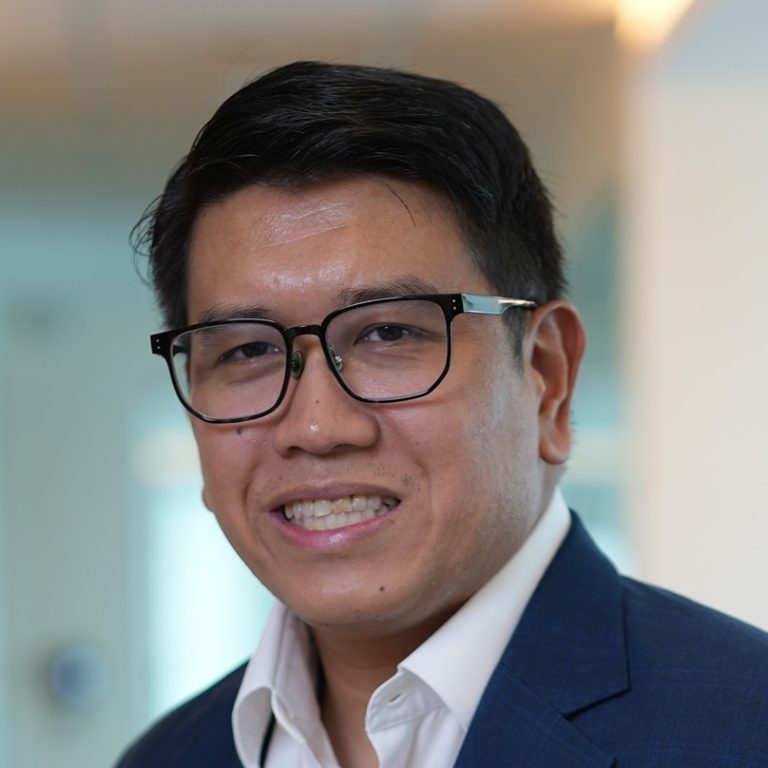
2027 SPEAKERS






Speaking Opportunities:
- Christine Tan
- christinetan@cxociety.com
WHY SPONSOR
We will help you GENERATE quality business leads.
We will help you INCREASE your regional profile.
We will help you CREATE new business opportunities.
- Get cost-effective marketing exposure and branding to your target audience, culminating in face-to-face meetings with your prospects.
- Position and profile yourself as an industry leader.
- Increase your brand recognition.
- Create new partnerships and alliances.
- Develop relationships through new virtual networking opportunities.
- Showcase new products and services to a targeted audience of decision makers.
- Get direct and exclusive access to Key decision-makers
Sponsorship Opportunities:
- Nigel Standley
- +65 9176 6363
- nigelstandley@cxociety.com
- Perry Zhao
- +65 9298 6097
- perryzhao@cxociety.com
2024 SPONSORS & PARTNERS
SUPPORTING ORGANISATION

2026 SPONSORS & PARTNERS
DIAMOND SPONSOR

GOLD SPONSORS



SILVER SPONSOR

ROUNDTABLE SPONSORS

PARTNER SPONSOR

BUSINESS CONNECT SPONSORS




EXHIBITORS


SUPPORTING PARTNER


SUPPORTING ORGANISATION

SUPPORTING MEDIA